10 Best Mini Car Refrigerators for Travel?

Time:2026-09-30 Author:Madeline
0%

A long drive can expose the weaknesses of ordinary coolers. Warm drinks, melted ice, and leaking food quickly become frustrating. A reliable Mini Car Refrigerator offers a cleaner, steadier solution for road trips, camping, work sites, and family holidays.

This guide examines ten practical models for travel. We consider cooling range, power options, interior capacity, noise, insulation, portability, and temperature stability. We also look at details that product pages often hide. Can it fit behind a seat? Does the cable reach the vehicle socket? Will the lid stay secure over rough roads? These small questions matter.

Dometic CEO Juan Vargues has described the company’s design purpose as “making outdoor life more comfortable, more convenient, and more enjoyable.” That idea fits portable refrigeration well. Comfort is not only cold food. It is easy loading, simple controls, dependable power, and less mess during a long journey.

Real-world use can be imperfect. A refrigerator may cool slowly after repeated opening. Some models feel spacious but waste room around the compressor. Others advertise impressive capacity, yet their baskets limit usable space. No single unit wins every trip.

Our comparisons aim to balance specifications with practical experience. We assess how each Mini Car Refrigerator performs in realistic travel conditions, including limited vehicle space and changing temperatures. The final choices are not based on appearance alone. They reflect convenience, durability, efficiency, and trustworthy user value. Because travel gear should earn its place.
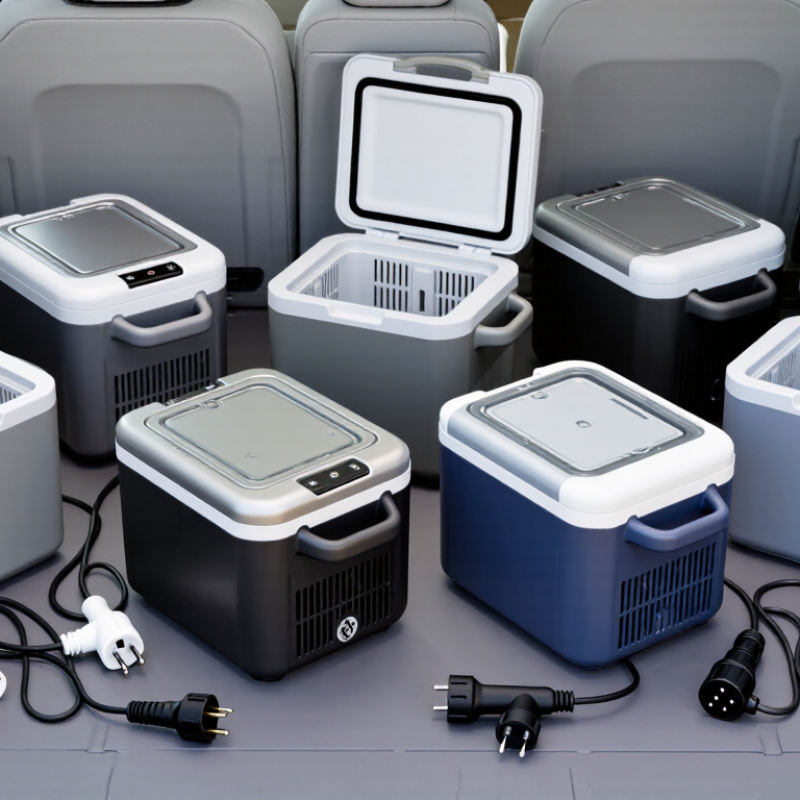
10 Best Mini Car Refrigerators for Travel?

What Is a Mini Car Refrigerator and How Does It Work?

A mini car refrigerator is a compact insulated cabinet that cools food using electricity from a vehicle’s 12-volt outlet or another power source. Unlike a passive cooler, it actively removes heat. Most models use either a compressor, similar to a household refrigerator, or thermoelectric cooling, which moves heat across a small electrical module. Compressor units can generally cool more effectively in hot conditions. Thermoelectric units are often lighter, but their performance can depend heavily on the surrounding temperature. Small details matter: leave space around the vents, secure the unit on the floor, and keep the lid closed at stops.

Temperature is more than a comfort setting. The U.S. Department of Agriculture advises keeping refrigerators at or below 40°F (4°C) to slow the growth of harmful bacteria. A car refrigerator’s display may show its internal air temperature, not the temperature of every item inside. A warm bottle placed near the lid can take time to cool. Use a separate thermometer to check, especially before storing perishable food for a long drive. Keep the power limits in mind, too. A refrigerator drawing power while the engine is off may drain the vehicle battery. That part is easy to overlook. A mini fridge helps manage temperature, but it does not instantly chill warm groceries or guarantee safe storage without monitoring.

Key Features to Compare Before Choosing a Travel Refrigerator

10 Best Mini Car Refrigerators for Travel?
Key Features to Compare Before Choosing a Travel Refrigerator

A travel refrigerator should match your trip, not just fit your trunk. Compare usable capacity in liters, interior dimensions, and the shape of the compartment. A tall bottle may not fit even when the stated capacity looks generous. Check the temperature range and cooling method, too. Compressor models generally handle warmer surroundings better, while simpler thermoelectric units may cool less effectively when cabin temperatures rise. The U.S. Department of Agriculture advises keeping perishable food at 40°F (4°C) or below. A built-in display helps, but verify the temperature with a separate thermometer.

Power details matter on long drives. Look at the rated draw in watts, plug type, cable length, and any low-voltage battery protection. A refrigerator that runs with the engine off can drain a vehicle battery; actual runtime depends on its capacity, condition, and the cooler’s settings. Check noise ratings if it will sit near sleeping passengers. Also compare insulation, lid seals, weight, and whether the unit can be secured against sliding. These small details are easy to overlook.

Tips: Pre-chill the refrigerator and food at home, then load it with minimal empty space. Test it overnight before a trip, and note the cabin temperature and battery level. Real-world results can be less tidy than the product specifications suggest.

The 10 Best Mini Car Refrigerators for Different Travel Needs

Choosing a mini car refrigerator starts with the trip, not the cup holders. For short commutes, a compact thermoelectric cooler keeps snacks handy, though it may cool slowly in a hot cabin. A compressor model suits long drives and warm climates because it can reach colder temperatures. Check the stated temperature range and power draw before buying. Small details matter.

For solo travelers, a lightweight unit with a top-opening lid is easy to move between car and room. Families may prefer a larger-capacity fridge with removable baskets, so drinks and lunch containers stay separate. A dual-zone design helps when one side needs to chill drinks and the other needs a different setting. For narrow trunks, measure the available space with the seats in their usual position. I would not trust a product photo for fit.

Some travelers need a model that runs from both a vehicle outlet and household power; others benefit from battery protection that reduces the risk of draining the car battery. A quiet unit matters on overnight stops, while sturdy handles and a secure lid help on rough roads. Look for clear ventilation requirements, simple controls, and a realistic capacity figure. The trade-off is real: extra features often mean more weight, cost, and energy use. A fridge that fits your routine may beat the most feature-packed option.

10 Best Mini Car Refrigerators for Different Travel Needs

This comparison uses practical portable-refrigerator capacity benchmarks for common travel situations. Larger capacities are better for extended trips, while compact units are easier to carry and fit in smaller vehicles.

Capacity recommendations are based on typical food and beverage storage needs: approximately 8–12 L for short outings, 15–25 L for weekend travel, and 30–45 L for family or multi-day trips.

Power Options, Capacity, Cooling Performance, and Portability

A useful mini car refrigerator should match the trip, not just look compact in a product photo. A 12-volt socket is convenient, while a model with AC input can also run at a campsite or hotel. For overnight stops, check whether the unit has battery protection and note its stated power draw. The U.S. Department of Energy’s fuel-economy guidance says vehicle air conditioning can reduce fuel economy by more than 25% in very hot weather and on short trips. That figure is not a refrigerator test, but it is a reminder to plan accessory power carefully.

Capacity claims need context. A 20-liter compartment may fit drinks and lunch, but bulky containers waste space quickly. Cooling performance also depends on heat, ventilation, and how often the lid opens. Check independent tests for pull-down time and temperature stability, rather than relying only on a lowest-temperature claim. Keep food at or below 40°F (4°C), the USDA’s recommended refrigerator limit. Small detail, big deal. Portability matters too: measure the space behind a seat, check the loaded weight, and look for handles that feel secure. I would still leave room for airflow; it is easy to overlook, and a tightly wedged cooler may struggle on a hot drive.

10 Best Mini Car Refrigerators for Travel? — Power Options, Capacity, Cooling Performance, and Portability
Travel Use Cooling Type Typical Capacity Power Options Typical Cooling Performance Portability Best For Important Consideration
Best all-round choice Compressor 20–30 L 12/24 V DC; many units also accept 100–240 V AC Often adjustable to below-freezing temperatures; performance is less dependent on outdoor heat than thermoelectric cooling Compact footprint; usually manageable for one person, though weight varies Road trips, camping, and keeping food properly chilled Check loaded dimensions, ventilation clearance, and the vehicle’s available power supply
Best for solo travelers Compressor 10–18 L Usually 12/24 V DC; AC operation may require an included or separate adapter Can chill to refrigerator temperatures and, depending on the unit, freeze contents Small and easier to carry; limited room for larger bottles or several meals Commuting, day trips, and one-person travel Measure the space around the door and lid before choosing a compact unit
Best for couples Compressor 25–35 L 12/24 V DC; AC support is common but not universal Generally offers adjustable cooling, with some models capable of freezing Portable between stops, but heavier when filled Weekend trips with drinks, snacks, and fresh ingredients Allow airflow around the compressor vents, especially in enclosed vehicle spaces
Best for family travel Compressor 35–50 L 12/24 V DC; many models can also run from household AC power Active cooling with a set temperature; some designs provide separate cooling zones Large and often heavy when full; handles or wheels can help Long drives and trips requiring food storage for several people Confirm that the unit fits the vehicle and that its loaded weight is practical to move
Best for hot-weather trips Compressor 20–40 L Typically 12/24 V DC, with AC available on many models Maintains a user-selected temperature more effectively in warm conditions than a thermoelectric cooler Moderate to bulky, depending on capacity Travel in warm climates or parking situations where cabin temperatures rise Keep it shaded and ventilated; direct sun and hot surroundings still increase power demand
Best lightweight budget option Thermoelectric 6–15 L Commonly 12 V DC; some units include an AC adapter Typically cools to a stated amount below the surrounding air temperature rather than holding a fixed temperature Usually light and simple to carry Short trips, drinks, and modest cooling needs Cooling is limited in hot weather; check the manufacturer’s temperature-difference rating
Best for drink-only use Thermoelectric 8–20 L Often 12 V DC; AC compatibility varies Provides relative cooling; contents may not reach food-safe refrigerator temperatures in a hot vehicle Lightweight, with capacity for cans or small bottles Keeping beverages cooler during short drives Pre-chilled drinks cool more reliably than warm drinks placed inside
Best compact dual-purpose option Thermoelectric with heat/cool modes 6–18 L Usually 12 V DC; some models also support household AC Can cool relative to ambient temperature and warm contents to a controlled range, depending on the unit Light and convenient for occasional use Short journeys when both cooling and gentle warming are useful Warming mode is not a substitute for cooking or maintaining food at a verified safe temperature
Best for longer off-grid stops Compressor 20–40 L 12/24 V DC; some units can connect to compatible external battery systems Adjustable cooling; compressor cycling can reduce average draw after the target temperature is reached Portable, but typically heavier than thermoelectric alternatives Camping and extended stops away from household outlets Battery runtime depends on ambient temperature, set temperature, ventilation, and battery capacity
Best for tight vehicle spaces Compact compressor 10–20 L Usually 12/24 V DC; AC support varies by model Can provide active refrigeration in a smaller enclosure; exact temperature range varies Small footprint, but lid clearance and access still matter Cars with limited cargo space or travelers who pack lightly Check external dimensions, lid-opening direction, cable reach, and ventilation requirements

Note: Capacity, temperature range, power compatibility, and weight vary by model. Cooling figures for thermoelectric units are commonly expressed as a temperature difference from ambient air, while compressor units generally use an adjustable target temperature. Check the product specifications and vehicle power limits before purchase.

Safety, Maintenance, and Tips for Using a Car Refrigerator**

A mini car refrigerator is only useful if it keeps food reliably cold. USDA Food Safety and Inspection Service guidance recommends keeping refrigerators at or below 40°F (4°C). Place a small appliance thermometer inside; the built-in display may not show the warmest corner. Pre-chill the unit and food at home, then pack items tightly in sealed containers. Keep raw meat leakproof and separate from ready-to-eat food. Keep it cold. Avoid loading warm leftovers, which can raise the temperature for everything around them.

Park the unit where its vents stay clear, and secure it so it cannot slide during a sudden stop. Check the vehicle manual before using a power outlet with the engine off; some outlets may drain the starter battery. A low-voltage cutoff helps, but it is not a substitute for checking battery condition. The easy mistake is trusting the dial. Verify the actual temperature during long drives, especially on hot days, and discard perishable food if you cannot confirm it stayed safely chilled.

Unplug the refrigerator before cleaning. Wipe spills promptly, wash removable parts with mild soap, and dry the interior before closing the lid to limit odors and mildew. Check the door seal for crumbs or gaps; even a thin leak makes the compressor work harder. Leave airflow around the vents, and do not pack food above the fill line. One practical flaw: compact units run out of space quickly, so a small cooler for drinks may prevent constant lid-opening.

FAQS

What capacity should a travel refrigerator have for a road trip?

Compare usable liters, not only the advertised capacity. Measure the interior carefully. A tall bottle may not fit. Compact space disappears quickly.

What temperature should a car refrigerator maintain?

Keep perishable food at or below 40°F (4°C). Place a small thermometer inside. The warmest corner may differ from the display. Trust, but verify.

Are compressor refrigerators better for hot travel conditions?

Compressor models usually handle warm surroundings more effectively. Thermoelectric units may cool less when the cabin becomes hot. Actual performance can vary.

How can I prevent the refrigerator from draining my vehicle battery?

Check its wattage, cable length, plug type, and low-voltage cutoff. Running it with the engine off may drain the starter battery. Test overnight first.

How should food be packed inside a travel refrigerator?

Pre-chill the refrigerator and food at home. Use sealed containers and leave little empty space. Keep raw meat leakproof and separate. Avoid warm leftovers.

Where should I place a mini refrigerator inside a vehicle?

Keep its vents clear and secure the unit against sliding. A sudden stop can turn it into a heavy moving object. Do not cover the vents.

How can I reduce odors and mildew after using the refrigerator?

Unplug it before cleaning. Wipe spills quickly, wash removable parts with mild soap, and dry the interior. Check the lid seal for crumbs or gaps.

How can I know whether the refrigerator will work well during a real trip?

Test it overnight before leaving. Record the cabin temperature, internal temperature, and battery level. Product specifications look neat; real trips are less tidy.

Conclusion

A Mini Car Refrigerator is a compact cooling device designed to keep food and drinks chilled while traveling. This guide explains how these refrigerators work and what to compare before choosing one, including power options, storage capacity, cooling performance, size, and portability. It also considers how different designs may suit road trips, daily commutes, camping, or other travel needs, helping readers identify the right balance of convenience and cooling space.

The guide reviews ten options for a range of travel situations and offers practical advice for safe, reliable use. Learn how to position and power a refrigerator, organize its contents, maintain clean surfaces, and care for its ventilation and electrical connections. By considering your travel habits and the features that matter most, you can choose a suitable refrigerator and keep essentials cool throughout the journey.


Madeline

Madeline

Madeline is a dedicated marketing professional with a wealth of expertise in our company's core offerings. With a keen understanding of the industry, she brings a unique perspective to her role, consistently delivering high-quality content that highlights the superior aspects of our products. As......